
Stripes are one of the fastest ways to make a space feel crisp, coastal, and intentionally styled. In a coastal setting, stripe patterns echo classic beach houses, nautical references, and sun-washed simplicity—without feeling overly themed.
If you want to shop the look, start with Blue Water Songs’ coastal pillow covers collection: https://bluewatersongs.com/collections/coastal-pillow-covers.
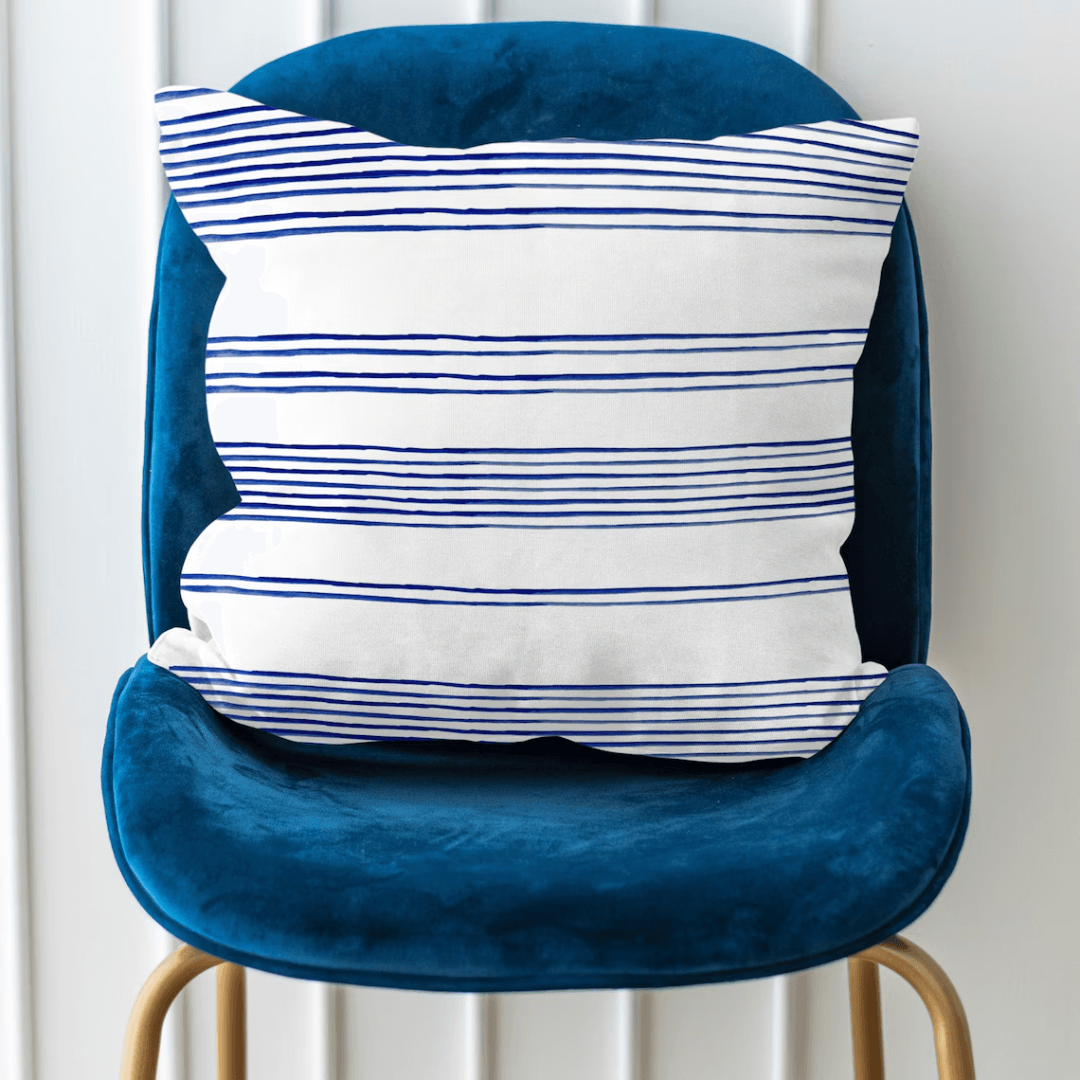
Blue-and-white stripes are a coastal staple: clean, bright, and easy to pair with neutrals.
Why stripes are timeless in coastal decor
Stripes signal order and ease—two qualities that define great coastal interiors. The pattern is structured enough to feel tailored, but simple enough to stay relaxed. In practical styling terms, stripes act like a “bridge” between solid linens, natural textures (rattan, jute, raw wood), and more organic patterns (watercolor florals, botanical prints, painterly motifs).
Why stripes work so well for coastal spaces
- Instant coastal read: stripes (especially blue/white) nod to shoreline and nautical heritage.
- Low visual clutter: a stripe is graphic, but not busy—ideal for airy rooms.
- Easy mixing: stripes pair with solids, textured weaves, and select prints.
The psychology and appeal of stripe patterns
Stripes create rhythm. Horizontal stripes tend to feel calm and expansive, while vertical stripes can feel uplifting and tailored. On pillows, the effect is usually subtle—but it still influences how “open” or “grounded” a seating area feels.
- Horizontal stripes: visually widen a sofa or bed and read more relaxed.
- Vertical stripes: feel a bit more formal, adding a “designed” look.
- Diagonal stripes: introduce movement and energy (best used sparingly).
Are stripes in style 2026? Trends and forecasts
Yes—stripes are expected to remain in style in 2025, largely because they are one of the most adaptable “classic” patterns. What changes year to year is how stripes are used: scale, color pairings, and the mix of stripes with texture and artisan prints.
Stripe trends you’ll keep seeing
- Scale play: mixing narrow pinstripes with wide cabana stripes in the same space.
- Soft-edged stripes: watercolor or painterly stripes that feel less rigid than crisp ticking.
- Coastal neutrals: sand/cream/stone stripes replacing stark contrast in calmer rooms.
- Indoor-outdoor crossover: stripe patterns used on patio pieces and brought indoors for continuity.
Choosing the right stripe patterns for your coastal space
The best stripe pattern depends on the room’s base palette and how “nautical” you want the end result to feel. A high-contrast navy stripe reads more traditional and maritime; a softer blue-grey stripe reads more modern and coastal.
A quick decision guide
- Minimal, modern coastal: low-contrast stripes (blue-grey on white, or sand on cream).
- Classic Hamptons / nautical: crisp blue-and-white stripes with clean edges.
- Relaxed, artistic coastal: watercolor stripes and hand-painted effects.
Color palettes: blues, whites, and neutrals for coastal vibes
Coastal stripes look best when you keep the palette disciplined. If your sofa or bedding is already patterned, pick stripe colors that repeat what’s already present. If your base is neutral, stripes can become the focal point.
Reliable coastal stripe palettes
- Blue + white: the crisp coastal standard (fresh, high-contrast).
- Blue-grey + white: softer, more contemporary, easier in mixed interiors.
- Sand + cream: subtle, texture-forward, great for calm bedrooms.
- Navy + natural flax: grounded and elevated, especially with woven rugs and wood.
Mixing and matching: combining stripes with other patterns
Stripes are an ideal “anchor” pattern. Once you choose your striped pillow covers, you can layer in one additional print family (for example, watercolor florals) and one texture (for example, a woven neutral). The key is limiting your total pattern types so the room doesn’t feel chaotic.
Three mixes that consistently look intentional
- Stripes + textured solid: the easiest way to build a clean set (add depth without extra pattern).
- Stripes + watercolor floral: balances structure (stripe) with softness (organic shapes).
- Stripes + small-scale print: pair wide stripes with tiny patterns so one doesn’t compete with the other.
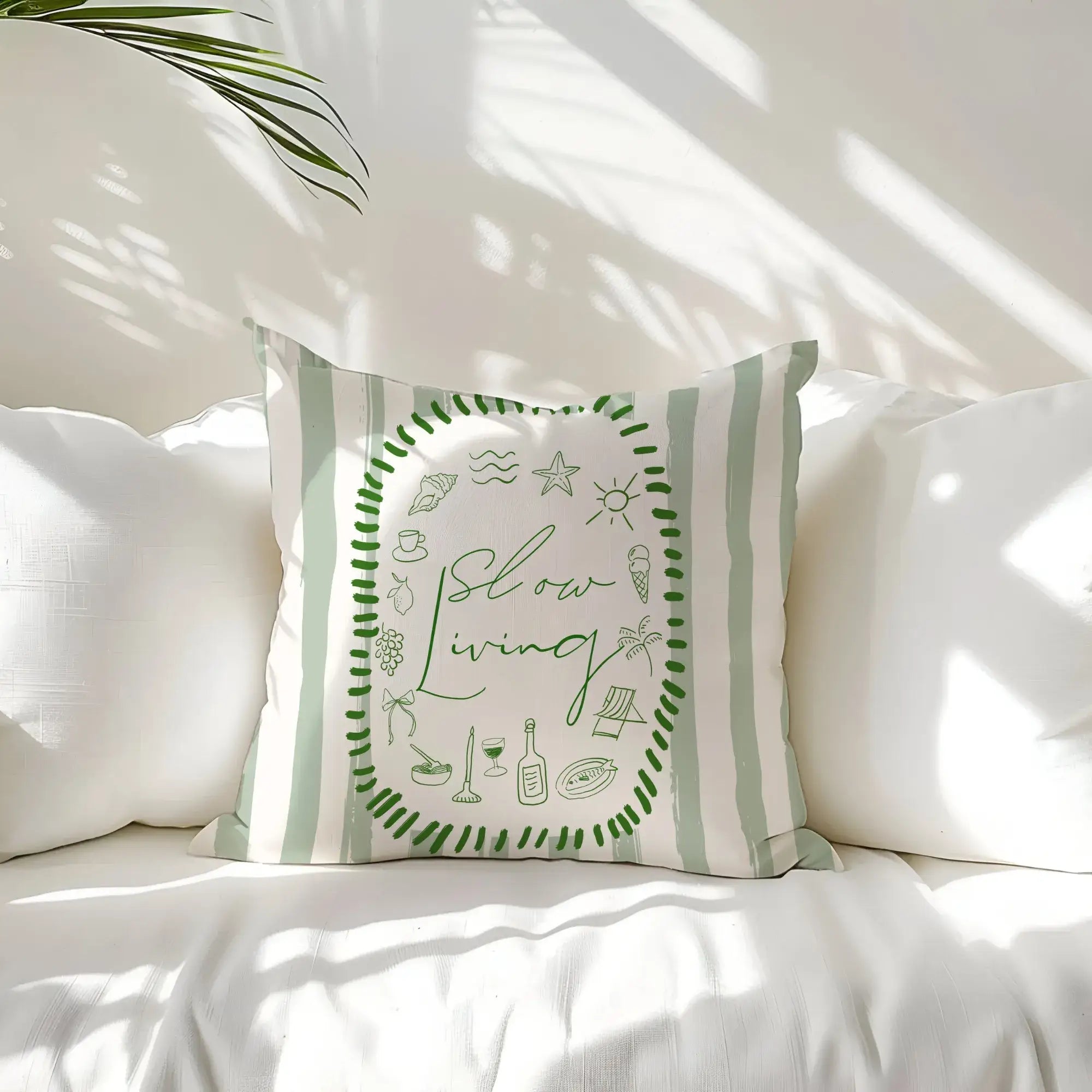
A softer, illustration-forward stripe can balance a coastal palette without going fully nautical.
Placement ideas: where to use striped pillows indoors and outdoors
Striped pillows are particularly effective in “transition zones”—rooms that connect indoors and outdoors, or seating areas that need a visual reset without new furniture.
- Living room sofa: place stripes on the outer positions to frame the arrangement.
- Bed: use one striped lumbar in front of solids for a clean coastal finish.
- Reading nook: a single stripe can make a neutral chair look styled.
- Patio seating: stripes read classic outdoors and pair well with teak and white metal.
Styling tips: creating balance and visual interest with stripes
When stripes feel “too loud,” it’s usually a scale or contrast issue. Adjusting stripe width, reducing contrast, or adding texture typically fixes the problem quickly.
Fast fixes that work
- Limit stripe count: in a 5-pillow set, 1–2 striped covers are often enough.
- Repeat a color: echo the stripe’s blue in a throw, rug detail, or artwork for cohesion.
- Add one neutral texture: a woven or linen-like cover calms the set.
- Keep the rest simple: stripes do best against clean backdrops (solid upholstery, light walls).
Shop striped coastal pillows (Blue Water Songs)
To start building a stripe-based coastal set, browse the coastal pillow covers collection: https://bluewatersongs.com/collections/coastal-pillow-covers.
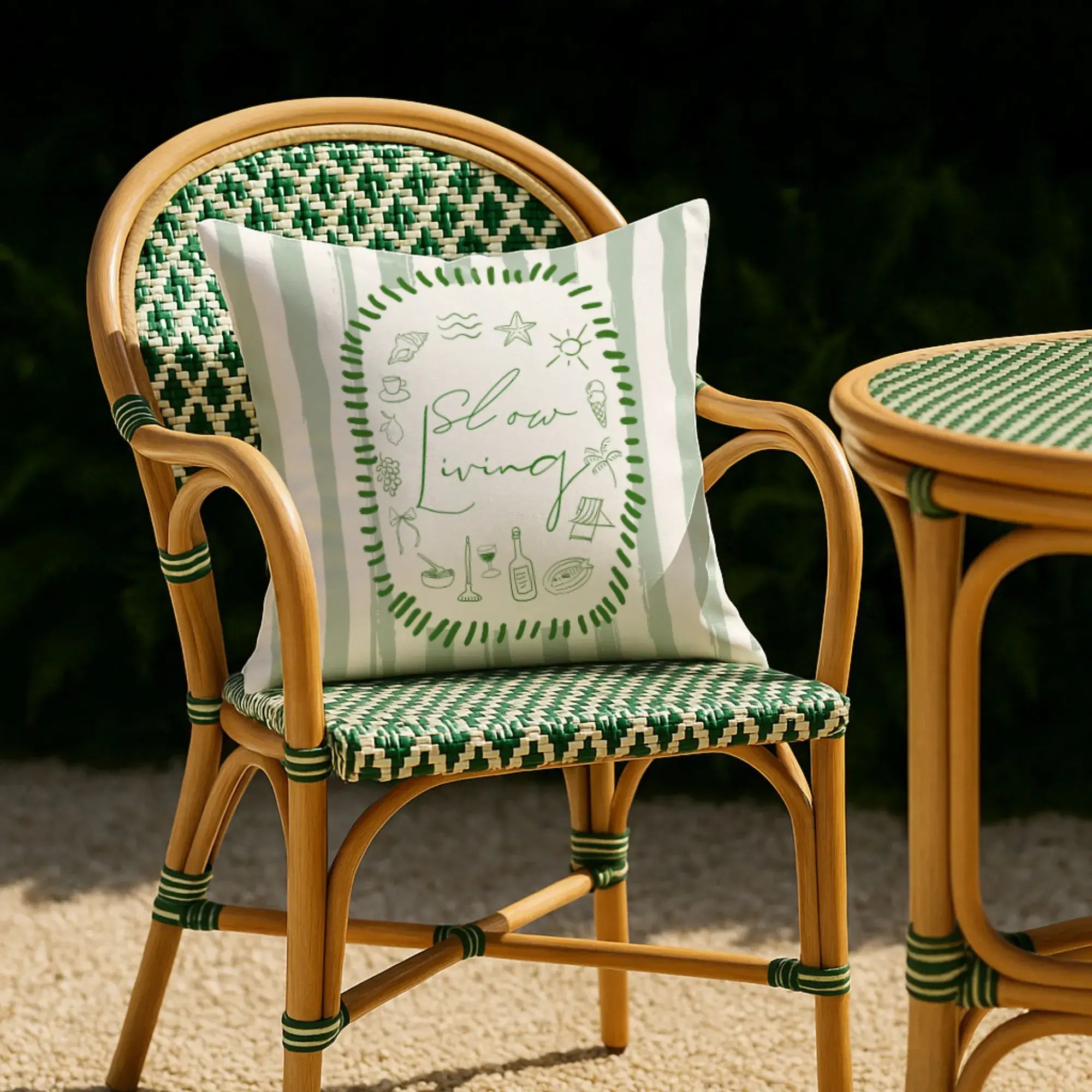
Use one statement cover, then repeat its key colors in simpler stripe and solid textures for a cohesive set.
Featured links
- Watercolor Grey Blue Striped Outdoor Pillow (a softer, painterly take on stripes)
- Watercolor Wildflower & Berry Pillow and Cover (a complementary print to mix with stripes)
- Slow Living “La Dolce Vita” Pillow Cover (a text-led accent to balance stripes)
Conclusion: embracing style stripes for a fresh coastal look
Stripes remain a smart coastal choice because they’re both timeless and flexible: you can go classic and nautical, modern and minimal, or soft and artistic depending on scale and color. Build your set around one strong stripe, support it with textures and solids, then add one complementary print. The result is a coastal look that feels curated, not themed—and stays in style well beyond 2026.